
by Shareen K. Murayama
by Laura Passin
When the world ends, it will not
matter who, exactly, left it early—
the years shaved off the living
heart, the brain cells torqued
and plaqued by damaged genes.
It will not matter
that once the Cuyahoga lit up
like a factory dying, that the water bequeathed
to the Great Lakes by tired glaciers corroded
ships and fish alike. What we leave behind
is massive, minute: a layer of unusual soil
that circles a moment,
a diseased ring in the globe’s bark.
That’s how we figured out
what ate the dinosaurs:
a strange signature, everywhere.
No one will miss us.
We are the comet ourselves.
______________________________________________________________
Laura Passin is the author of Borrowing Your Body (Riot in Your Throat, 2021) and All Sex and No Story (Rabbit Catastrophe Press). She earned her PhD in English Literature at Northwestern and her MFA in Creative Writing at the University of Oregon. Her writing has appeared in a wide range of publications, including Prairie Schooner, Glass: A Journal of Poetry, The Toast, Rolling Stone, Electric Literature, and Best New Poets. Laura lives in Denver with too many pets.
by Vicki Iorio
The geese take over the runway
when production of the F14 shuts down.
Long after their winged visas expire
these immigrants stay
on Long Island, finding the climate
kinder than Canada.
Clipboard in hand, heavy with you,
I waddle into the boneyard in search of scrap metal.
Nesting with her green goslings in a broken cockpit,
a gray mother hisses at me and refuses
to leave the pilot seat even after I flash
my Government ID. I put off the disposal
of this fuselage, while I wait for these fledglings
to become juveniles, for the military
precision of their flyby.
______________________________________________________________
Vicki Iorio is the author of the full-length poetry collections Poems from the Dirty Couch (Local Gems Press) and Not Sorry (Alien Buddha Press) as well as the chapbooks Send Me a Letter (dancinggirlpress) and Something Fish (Finishing Line Press). Her poetry has appeared in numerous print and on-line journals including The Painted Bride Quarterly, Rattle, poets respond on line, The Fem Lit Magazine, and The American Journal of Poetry. Vicki is currently living in Florida but her heart is in New York.
by Lisa C. Krueger
Daisies for innocence, roses
for love—everyone speaks
a little flower, lexicon
of forebears. Dahlias
for dignity, rosemary
for remembrance: at birth,
my daughter is a bud
on the Flower of Life.
Not ill but daffodil, born
under summer’s golden moon.
I bargained for her!
Anything, I whispered.
Hardship. Illness—
I said it, I said it
on my knees in the garden,
leaves falling as I dug past light.
Daffodils for new beginnings.
I planted them everywhere.
Anemone: fragility. Did I buy
the wrong bulbs? What grew.
______________________________________________________________
Lisa C. Krueger is a poet and psychologist in Los Angeles. Her poems have appeared in various journals, including Alaska Quarterly Review, Barrow Street Review, Ploughshares, Prairie Schooner, and others. Red Hen Press has published four collections of her poetry, most recently, Run Away to the Yard, in 2017.
by Lytey Kay
I wish there was a word
for the way sap leaves a tree,
the moment all the women in me
turned blood into life, teeth chattering
lightning into the sky and I remember their eyes
the moment life returned to it, rain.
We grind salt on salt, dip our teary faces
in seawater, spritz rosewater as if only
we could remind the earth,
pawing at dirt, pawing at bones,
muddy paws grabbing for roots, praying
for a haunting wind
that wraps our spoils in a raven’s wing.
Would you feel them? If it poured down on you,
body as prop? If the clouds burst to ash upon your face
every time you couldn’t see yourself in a body,
every time you saw a body?
______________________________________________________________
Lytey Kay is a Caribbean-American poet from South Florida. She received a BA in English and Creative Writing from Florida Atlantic University. Her work is forthcoming in Hayden's Ferry Review and has been published in Coastlines Literary Magazine and Saw Palm.
by Mary Block
Any little bud of a baby knows
if it’s a girl or not. Forget me, Daisy.
My black-eyed baby, my pearl,
my dreamed-of daughter,
sweet incarnation of butter
and desert stars, blue asteroid
climbing a chocolate sky, go rise
in someone else’s east for a while.
Forgive me the crown, the chain.
Go be the sun for someone
who doesn’t need one.
______________________________________________________________
Mary Block lives and writes in her hometown of Miami, Florida. Her poems have appeared or are forthcoming in Best New Poets 2020, RHINO, Nimrod International Journal, and Sonora Review, among other publications. Her work can be found online at Rattle, SWWIM Every Day, Aquifer: The Florida Review Online, and elsewhere. She is a graduate of New York University's Creative Writing Program, a 2018 Best of the Net finalist, a 2012 finalist for the Ruth Lilly Poetry Fellowship from the Poetry Foundation, and a Pushcart Prize nominee.
by Emily Light
In my mother’s dreams, she would travel the country
recording all the Yiddish that remains in each broken family
because everyone has a yenta, but what about the keppy?
As in, let’s put our keppies together and stop being so farchadet.
My mother never went to Hebrew school because Grandma chopped off all her hair.
My mother never went to Hebrew school because she was too farchadet
because she had one too many brothers and the thunder in her brain
screams thunder, thunder, thunder over empty skies, thunder
passed down from the dark-eyed woman who broke with Russia
who taught my mother to clatter in the kitchen,
to clatter her tongue across her teeth,
to remind everyone that she had one too many brothers
and what about her broken keppy?
If she writes her dream dictionary
I hope she offers it to all the brothers and sisters—
a manifesto stitching the air,
the stormy, crackling air between them all.
______________________________________________________________
Emily Light’s poetry can be found in such journals as Inch, Lake Effect, Cumberland River Review, Paterson Literary Review, and others. She teaches English and lives in Boonton with her husband and son.
by Michelle Dodd
Black be the heaviest bond,
that will never leave you stranded.
Black be the sharpened knife when you
are cornered, with politics and slick mouths.
Black be the warmth of the sun,
when the world wants you to freeze.
Black be more than pride.
Black be the comfort of a womb.
Black be what newborns see before
they open their eyes.
Even stars lay on a blanket of black space.
What else could cover the universe with love, like black does?
______________________________________________________________
Michelle Dodd is a spoken word performer residing in Richmond, Va. Dodd was a part of an Emmy nominated commercial, "Colors of RVA", for NBC12 in 2019. She is a Graduate Fellow and on staff for The Watering Hole writing retreat. She has been a three time Winter Tangerine Fellow from 2018 to 2019.
by Bridget Bell
To reach the raised-bed garden, I drag my body through
the caterpillar grass and fescue until I’m at the cinderblocks
packed with dirt and the marigolds I grew
to ward off pests. The flowers failed. I take a rock,
pluck squash bugs from leaves’ pale
underbellies and smear their guts. Each insect
death is a heavy death, so I hush-wail
I’m sorry, I’m sorry. The necks
of thick-rind squash curve: a yellow grin
or frown, depending on the way you see
the contour, and the tomatoes rupture, skin
split like a wound and the mint, sprawled green
almost to seed, spits out its minuscule purple flowers,
so tiny but tough as bullets.
______________________________________________________________
Bridget Bell teaches English at Durham Technical Community College in Durham, NC. She also proofreads poetry manuscripts for Four Way Books. Her work has been published in several literary journals including Eclectica, The New Ohio Review, The Los Angeles Review Online, and Folio, among others. Her poem, "Raising Mothers," was recently featured in a presentation called “The Trials, Tolls, and Triumphs of Motherhood: The Many Faces of Postpartum Depression," through the Psychoanalytic Center of the Carolinas.
by Heidi Seaborn
~Beverly Hills Hotel, December 1958
Outside, hibiscus blooms
the color of raspberries.
We made her in this bungalow.
Tiny pink-throated hummingbird.
The doctor wore pink, I think.
“Would you like a cup of tea?”
The playwright writes the line.
It is dialogue; and I say, “Yes dear,
tea with bread and jam please.”
Then I remember jam spread
on the bedsheets.
In the cold of morning
I’ve held a hummingbird
like an egg, wings stilled.
______________________________________________________________
Heidi Seaborn is Executive Editor of The Adroit Journal and author of [PANK] Book Award winner An Insomniac’s Slumber Party with Marilyn Monroe (2021), Give a Girl Chaos (2019), and the 2020 Comstock Prize Chapbook, Bite Marks. Recent work appears in American Poetry Journal, Beloit Poetry Journal, Copper Nickel, SWWIM Every Day, The Cortland Review, The Greensboro Review, The Missouri Review, The Slowdown with Tracy K. Smith, Tinderbox Poetry Journal, and elsewhere. She holds an MFA in Poetry from NYU. See www.heidiseabornpoet.com.
by Michael A. De Armas
by Nicole Chvatal
My boss is a real estate attorney,
the director of a retirement home
and also runs a side hustle
in which he bids on the belongings
of the homes of those
who are about to move on,
or move in with their kids or down
South or wherever. Treasures no longer
important enough to fit. In Maine
survival often depends on these types
of secondary jobs: Snow ploughing to push
a little more cash into the coffers, clamming
licenses to dig out a bushel
of Casco Bay littlenecks in the summer.
At estate sales he makes, tops, a couple grand
then trashes the rest: colanders, lawn chairs,
collections of ballpoint pens and flimsy matchbooks
in old coffee cans. You can’t take it with you
remains true, and it’s easy to tell
the mortal state of the one who’s gone.
Generally speaking, the living leave behind the most.
While the dead take the delicate bone
china sugar bowls and the gold Colby signet ring,
the snowbirds have no use for the melamine.
_____________________________________________________________
Nicole Chvatal writes property deeds and other witty things and lives in Maine. Her work has appeared in LEON, The Portland Press Herald newspaper, Pilgrimage, and Verseweavers. She is a graduate of the MFA Program for Writers at Warren Wilson College.
by Carol Berg
by Natasha Sajé
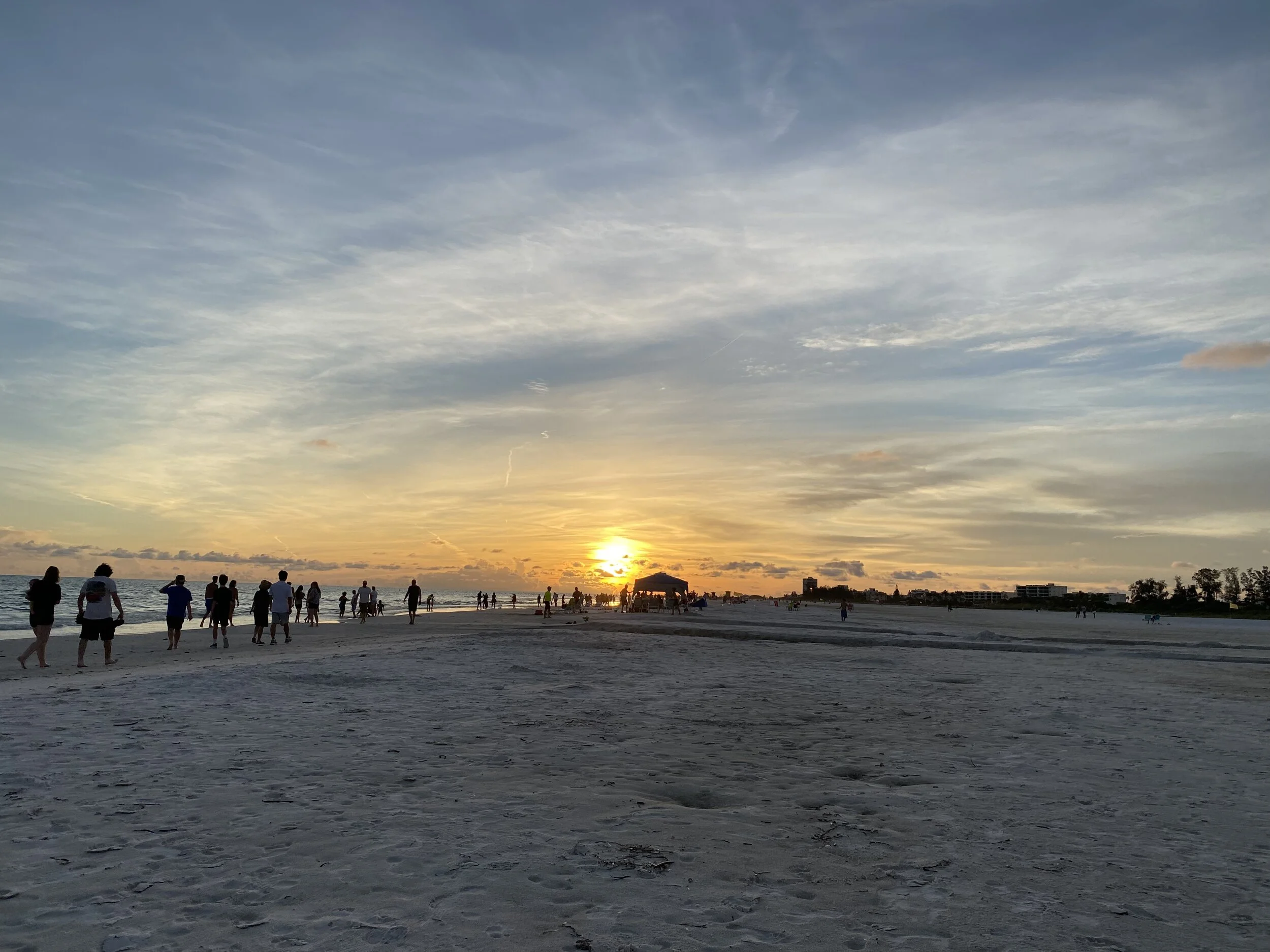
Summer Break
SWWIM Every Day will be on a publishing hiatus for the rest of July. Please check back on 8/2 for new poems. Until then, feel free to peruse our archives. If you don’t already, please subscribe to receive a poem a day, so you don’t miss a thing when we’re back up and running.
Weekly Shout Outs will also be on hold. Please continue to send us your wins, so we can celebrate you and your work when we return.
Submissions will remain open. Response times may be a bit delayed as we’re traveling, spending time with our families, writing, and working for SWWIM behind the scenes. Please stay tuned for an announcement about our 2021-22 reading series and other fun collabs.
Feel free to reach out to us via email or through social with any questions.
Happy summer! Stay cool!
XO
SWWIM Team
by Jenny Qi
My mother wanted flowers, fragrant
and lovely. So she flooded young seeds
until they boiled in midday heat,
and when they didn’t bloom, she thought
she could will blossoms with sullen silence.
My father wanted fruit trees, hardy
and useful. So he baked saplings in the sun
until they brittled into sand,
and when they didn’t ripen, he thought
he could shout them into submission.
At night, I snuck into the garden
and sang my pleas into the leaves.
Still, the gardenia blackened as if scorched,
the jasmine shot its stars into the ground,
the peaches puckered around unformed pits.
In the end, all we grew was oleander,
pink flesh burst from clay,
blowing sweet poison to the wind.
______________________________________________________________
Jenny Qi is the author of the debut poetry collection, Focal Point, winner of the 2020 Steel Toe Books Poetry Award. Her essays and poems have been published in The New York Times, Tin House, Rattle, and elsewhere, and she has received fellowships from Tin House, Omnidawn, Kearny Street Workshop, and the San Francisco Writers Grotto. She grew up in Las Vegas and now resides in San Francisco, where she completed her Ph.D. in Cancer Biology.
by Shannon Phillips
“…write your sexual life story in five sentences…
Then… do it again…
…a third time. A fourth.” – Melissa Febos
I
His name. His name. His name. My name. Breathe.
II
Three pregnancies, two children. The first. The last. The one.
I am not a math person.
III
I lost myself in a moment that didn’t belong to me. His voice made me do it.
His hands were too important. Night knows where to find me.
Just ask.
IV
It was late. It always is.
One night, while working on an English-Arabic translation project for class, I
typed “gasp” and then reverse-translated the first noun that came up. I was
given the phrase “longing for.” I got an A.
_____________________________________________________________
Shannon Phillips is a freelancer whose most recent chapbook was published by Small Fish Big Pond in 2019. She has an MFA in creative writing, and she is the editor at Picture Show Press.
by Lisa Rhoades
loves dandelions and stands
with an open globe,
and then blows and shrieks
and looks for the next. In the ball field
where we let the dogs run
the grasses have gone to seed,
the baseball diamond is unraked, the basketball
hoops removed, so that kids in quarantine
won’t try to play, won’t yell
and shout and jump this spring.
She won’t remember this. She won’t
remember how we held our breath.
The broad leaf plantain nods
its swollen bud, bindweed twists
through the chain links, a constellation of pink
clover swirls through the smaller white.
She picks flowers one by one.
She sends them flying
on the path of her breath.
______________________________________________________________
Lisa Rhoades is the author of The Long Grass (Saint Julian Press, 2020) and Strange Gravity (Bright Hill Press, 2004). Individual poems have appeared at Barrow Street, Poetry East, Prime Number, Saranac Review, South Carolina Review, and Psaltery & Lyre among others. In addition to teaching poetry, she works as a pediatric nurse in Manhattan. She lives on Staten Island with her spouse and their two children. Find her online at lisarhoades.com.
by Hannah Edwards
She said, "I'm afraid the fluorescent light
is going to fall on me,"
and I laughed, glancing up
at its cracked shield, the low, grating hum
“What if the mercury gas leaks out and—"
I told her she would live forever, then,
like an old Chinese king searching
for the secret to long life.
“I don't want to live that long. I don't know
how much more of that noise I can take.”
I looked up, but wasn’t wise enough
to see pointed shards, already falling.
______________________________________________________________
Hannah Edwards, in her spare time, is a teaching assistant at a local children’s theatre, where she demonstrates talents such as standing on “just one finger” or “breathing under water.” Recently, she and her girlfriend used 3D scanning and modeling to construct authentic Greek drama masks for productions of Oedipus Rex and Seven Against Thebes. Her previous publications include poems in Eclectica and Sugar House Review.
by Leah Claire Kaminski